Navigating Greece’s Record-High Construction Costs -m Sun Ionian Architects & Engineers in Kefalonia

Navigating Greece’s Record-High Construction Costs

For anyone eyeing real estate or development in Greece, the dream of a sun-drenched villa often collides with a stark macroeconomic reality. According to recent data from EUROSTAT, Greece’s Construction Cost Index has climbed to an all-time record high of 125.50 points in early 2026. To put this in perspective, when Eurostat began tracking this index in March of 2000, it sat at a baseline low of 76.10 points. We are currently witnessing the most expensive building climate in modern Greek history.

For the Ionian Islands—including hotspots like Corfu, Paxos, Lefkada, Kefalonia, and Zakynthos—this index acts as a baseline, but local geographic bottlenecks push actual on-the-ground expenses significantly higher.

The Macro View: Greece's Construction Cost Trajectory
Navigating Greece’s Record-High Construction Costs - Sun Ionian Architects

The structural climb in Greek building costs isn’t an overnight phenomenon, but rather a compounding wave driven by global material volatility, energy transitions, and a massive post-pandemic surge in foreign direct investment (FDI). While mainland infrastructure projects can somewhat absorb these costs through economy of scale, residential and luxury boutique developments face tighter margins.

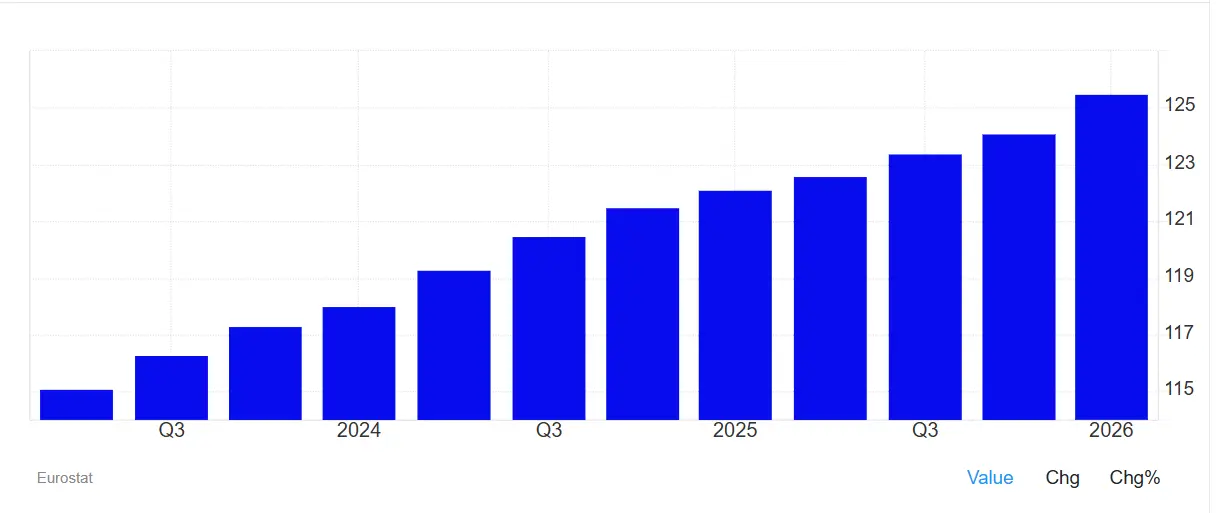
As shown in the chart fropm EUROSTAT, construction costs in Greece have experienced a steady and uninterrupted upward trajectory from late 2023 through the first half of 2026. Sourced from Eurostat, the data highlights persistent inflationary pressures within the sector, with the cost index climbing consistently every single quarter.

The index begins just above the 115 mark in 2023, surges past 119 by mid-2024, and comfortably clears the 121 and 123 thresholds throughout 2025. By the first half of 2026, costs reach their peak on the chart, soaring past the 125 mark. This relentless quarterly growth indicates that the macroeconomic factors driving up construction costs in Greece—such as material supply chain pressures, labor shortages, or energy costs—have remained highly active without experiencing any significant correction or leveling off over the last three years.

According to Eurostat, construction costs in Greece have undergone a relentless quarterly surge from late 2023 through the first half of 2026. This steady upward trajectory saw the index climb from just above 115 points to peak past the 125 mark in 2026, signaling persistent, uncorrected inflationary pressures across the Greek construction sector over a three-year period

The Ionian Premium: Why Islands Cost More.
Greece is currently experiencing its most expensive building climate in modern history. Record-High Index: In early 2026, Greece’s Construction Cost Index hit an all-time record high of 125.50 points. For context, the index sat at a baseline of 76.10 in 2000 and stabilized around 100.00 in the pre-2020 era. This massive climb is being fueled by a compounding wave of global material volatility, energy transitions, and a significant post-pandemic surge in Foreign Direct Investment (FDI).

Squeezed Margins: Unlike massive mainland infrastructure projects that can leverage economies of scale to absorb these cost shocks, residential and luxury boutique developments are facing much tighter financial margins.

The Ionian Premium: Why Islands Cost More.
When Eurostat publishes a national index of 125.50, that number represents a blended average. In the Ionian Sea, developers have to factor in what locals call the Island Premium.” Building on an island automatically introduces cost layers that do not exist on the mainland:

The Logistics Multiplier: Almost all heavy raw materials—ready-mix concrete, structural steel, rebar, and specialized insulation—must be trucked to ports (like Igoumenitsa or Patras) and ferried across. Ferry freight fees and weather delays directly inflate material line items by 15% to 30%.

Labor Deficits: The Ionian Islands have experienced a severe shortage of skilled construction labor. Local crews are often booked out for seasons, requiring developers to fly or ferry in specialized crews from Athens or Thessaloniki, covering their accommodation and per diems.

Geological & Seismic Compliance: The Ionian region is seismically active. Greek anti-seismic building codes are already among the strictest in Europe, demanding high volumes of structural steel and high-grade concrete. Combining record-high material indices with heavy structural requirements amplifies the baseline budget.

Strategic Takeaways for Investors and Developers

Building in the Ionian Islands remains highly lucrative due to soaring premium rental yields and luxury villa demand, but the era of casual budgeting is over. Navigating a 125.50 cost index requires distinct structural pivots:

Lock Materials Early: Secure supply chain contracts and buy core materials (steel, thermal bricks) during design phases rather than relying on just-in-time delivery.

Account for the Winter “Dead Zone”: Ferry schedules slow down and Ionian weather can halt concrete pours between November and February. Factor a 20% time buffer into your project roadmap to avoid costly crew idleness.

Prioritize Local Stone Integration: While steel and concrete are imported, stone craftsmanship is highly advanced in the Ionians. Blending traditional stone masonry with modern structural frames can sometimes optimize local material sourcing while satisfying strict island architectural regulations.

The Structural Drivers Behind the Surge

Navigating today’s inflationary market requires a granular look at where capital is deployed on-site. According to data tracked by ELSTAT, the lion's share of residential construction budgeting is tied directly to physical material procurement, commanding 57.8% of total structural expenses. This segment remains highly sensitive to international supply chain shocks and volatile baseline industrial costs. Simultaneously, domestic labor shortages and changing regulatory standards have pushed direct labor costs to a robust 32.2% share of the pie. The remaining 10.0% comprises a rapidly fluctuating mix of overheads, heavily impacted by rising construction diesel, machinery logistics, and localized administrative fees. For developers and investors alike, mitigating risk in Greece's high-cost real estate climate demands aggressive optimization across these three distinct pillars.

Kefalonia Property Prices - 2025 Property Pricies in Greece - 2026

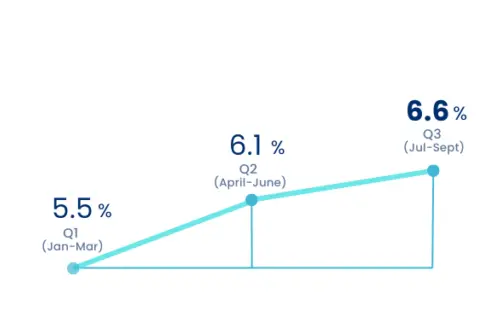
A comparative look at residential property price trends reveals distinct paces of growth across the Hellenic real estate sector. As shown in the upper graph, the property market in Kefalonia exhibits a steady, accelerating upward trajectory, climbing from an annual growth rate of 5.5% in Q1 to 6.1% in Q2, and reaching 6.6% by Q3.

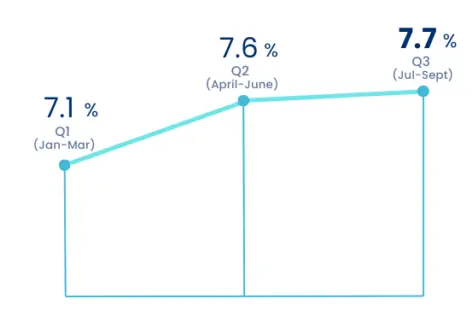
While this indicates strong local demand for Ionian island estates, it remains slightly below the broader national average. Across Greece as a whole, overall property prices surged by 7.1% in Q1 before consolidating at a high plateau of 7.6% in Q2 and 7.7% in Q3, driven by immense capital influx into urban centers and prime mainland developments.

The Tourism Factor: Driving Forces and Future Horizons

Tourism serves as the foundation of the Greek economy and significantly impacts its overall economic landscape; in 2024, it accounted for approximately 13% of the GDP, as reported by the Greek Tourism Confederation. According to the Bank of Greece, the total number of tourist arrivals in the country rose by 5.6% in 2025, increasing from 36 million tourists in 2024 to 38 million, following an annual growth of 9.8% in 2024.

However, the Greek construction industry is expected to slow down during the short-term, owing to legal uncertainties, high construction costs caused by the ongoing Middle-Eastern conflicts and a sluggish residential construction market.  A draft planning law in Greece, introduced by the Ministry of Environment and Energy in April 2026, is facing strong opposition from environmental groups to permit development in Sustainable Natural Resource Management Areas and extend deadlines to legalize unauthorized structures in sensitive zones.

While the government views this to unlock “green” capital, the opposition creates a climate of legal uncertainty for developers. Many investors and developers fear that projects approved under this law may face years of litigation in national and European courts, potentially delaying the very construction boom the government intended to foster.

ELSTAT Construction Material Price Index Report (April 2026)

The research document from the Hellenic Statistical Authority, reflects a steady acceleration from the 3.3% annual growth recorded in April 2025. On a monthly basis, the overall index ticked up 1.0% from March 2026, driven primarily by a 26.0% surge in diesel fuel and a 13.9% increase in electricity, alongside rising costs for core materials like bricks (+7.5%) and ready-mixed concrete (+5.2%).

Primary Cost Drivers: The annual increase was heavily driven by surges in energy and fuel costs, with diesel fuel spiking $26.0\%$ and electrical energy rising $13.9\%$, alongside steady increases in core building blocks like bricks ($+7.5\%$) and ready-mixed concrete ($+5.2\%$).

Powered By EmbedPress

Disclaimer: The information, architectural concepts, and case studies presented in this post are for informational and illustrative purposes only. Every project is subject to unique engineering, environmental, and regulatory requirements. Official structural assessments, design approvals, and technical consultations must be conducted directly through our firm before any project implementation.

Copyright © 2026 Sun Ionian. All rights reserved. No part of this publication, including text, original 3D renderings, or design concepts, may be reproduced, distributed, or transmitted in any form or by any means without the prior written permission of the copyright holder.